2025 Annual Impact Report
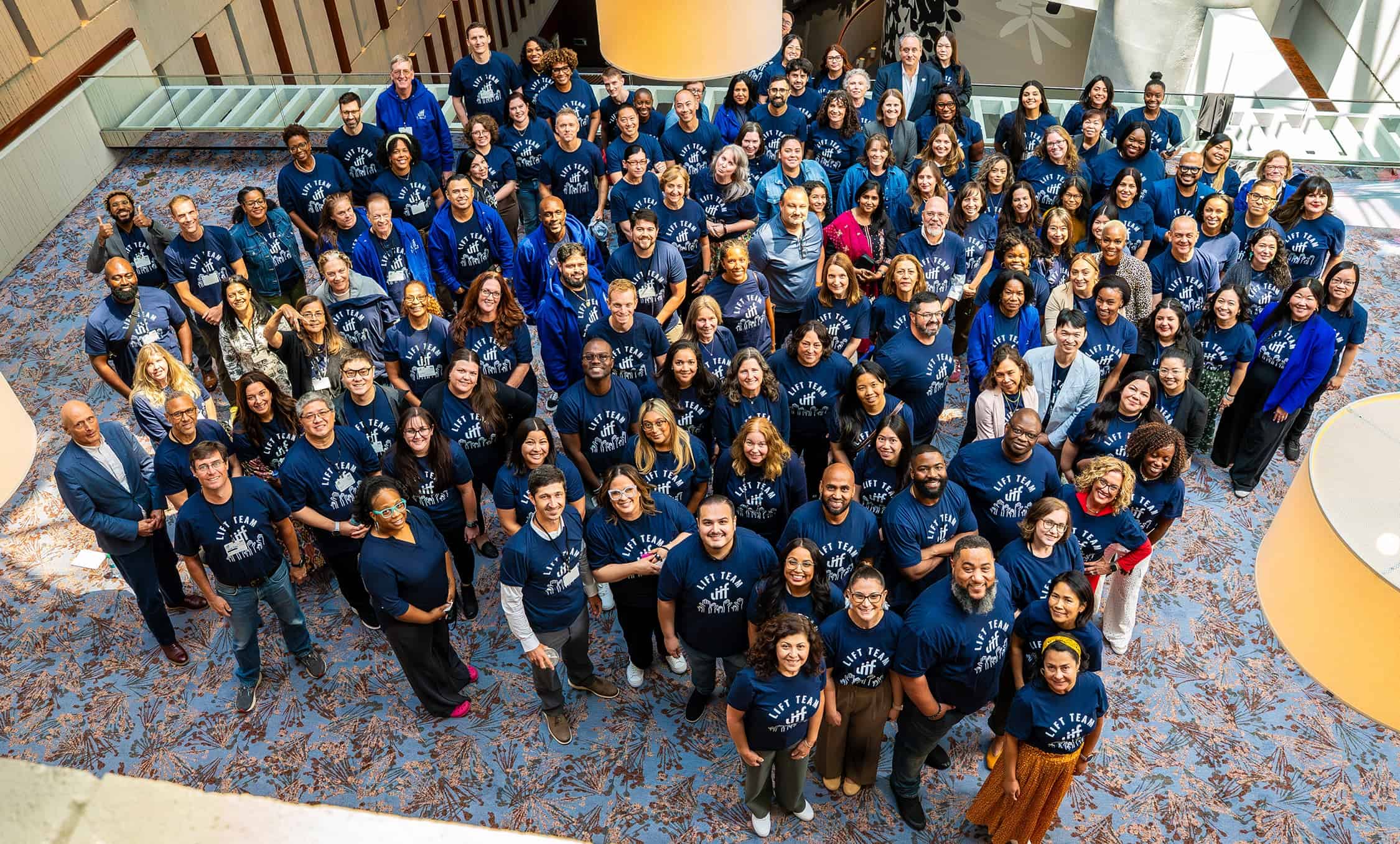
We Are Capital Innovators
See who leads our work
Creating Communities of Opportunity Nationwide
The Low Income Investment Fund (LIIF) is a nationally renowned organization providing catalytic capital that fills gaps in mainstream financial markets. The numbers since our 1984 inception demonstrate measurable impact: LIIF has invested $3.9 billion to serve 2.6 million Americans.
We create communities of opportunity via our three strategic pillars, which are the preservation and production of affordable housing; early care and education (ECE); and community facilities such as charter schools, nonprofit spaces and health centers.
Our mission is clear: Raise and structure capital to channel it into community projects that the private market can’t serve. In essence, we operate as a parallel banking system, addressing market inefficiencies and creating lasting solutions.
LIIF deploys catalytic capital across the life cycle of community projects, from early-stage and unconventional financing to innovative loan programs the private sector won’t touch. We don’t compete with or replace the banking system, but we work with them. We operate in geographies that banks cannot. LIIF provides smaller loans that banks are unable to offer, and we have a greater threshold for risk than most banks.
There must be some intentionality to developing communities and our purpose is about more than just moving money. Our work is fundamentally about expanding access to opportunity, to security and to economic mobility. This is the promise — and the power — of community development.
We are boots on the ground. We intermediate Wall Street to Main Street. We are capital innovators.
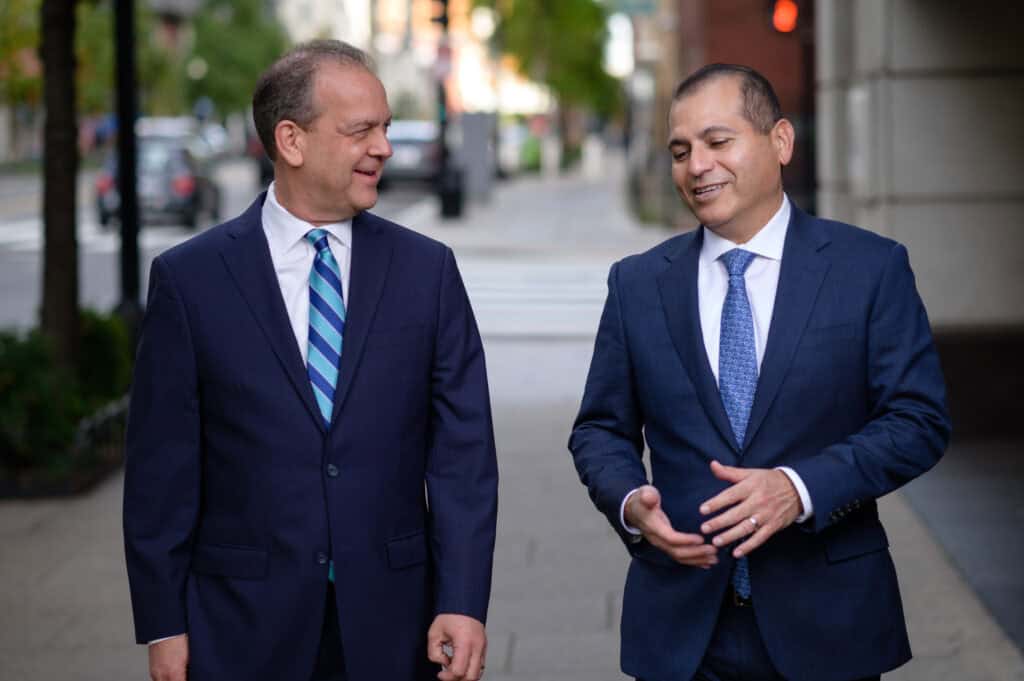
As we reflect on a year shaped with economic and political challenges, LIIF’s mission remained steadfast: raising and structuring capital to create opportunity in communities where mainstream financial markets fall short. We are recognized as a trusted capital innovator and steward. LIIF continues to produce and preserve affordable housing, develop actionable solutions for early care and education (ECE), and invest in vital community facilities such as charter schools and health care centers.”
Our Impact
77
%Of goal to drive $5 billion in investments to strengthen communities (2020-2030) – as of June 30, 2025
3.9
billioninvested in communities
2.6
millionpeople served
65
FY25 loans closed

We are Capital Innovators: Seeding Growth, Harvesting Hope
New Orleans, Louisiana native Rochelle Wilcox had a vision of building her fourth child care center, with this one right across from the park where she whiled away the hours as a youngster in Central City. They may call New Orleans “The Big Easy,” but it was anything but easy for Rochelle to access early-stage catalytic capital from mainstream financial institutions.
That’s when a determined Rochelle turned to LIIF, knowing our community development financial institution (CDFI) could fill gaps in the traditional financial market and figure how to make her entrepreneurial dreams a reality. So, as always, the LIIF Team rolled up their sleeves and put their expertise into action. The outcome was an intricate capital stack leveraging the New Markets Tax Credit (NMTC) program, a federal tool that drives investments into low-income neighborhoods by encouraging investors to put money into community-development entities; in return, the investor receives tax credits that reduce their federal income tax liability. The NMTC allocation was complemented by LIIF’s $2.75 million, eight-year, low-interest Brighter Futures Fund loan, which is a program supported by our strategic partnership with Goldman Sachs. As a value-add in an expensive housing market, Rochelle is co-locating her new center-based facility with four units of affordable housing, hitting two of LIIF’s strategic priorities. Talk about a community win.
Affordable Housing Impact
108
K+affordable homes produced or preserved
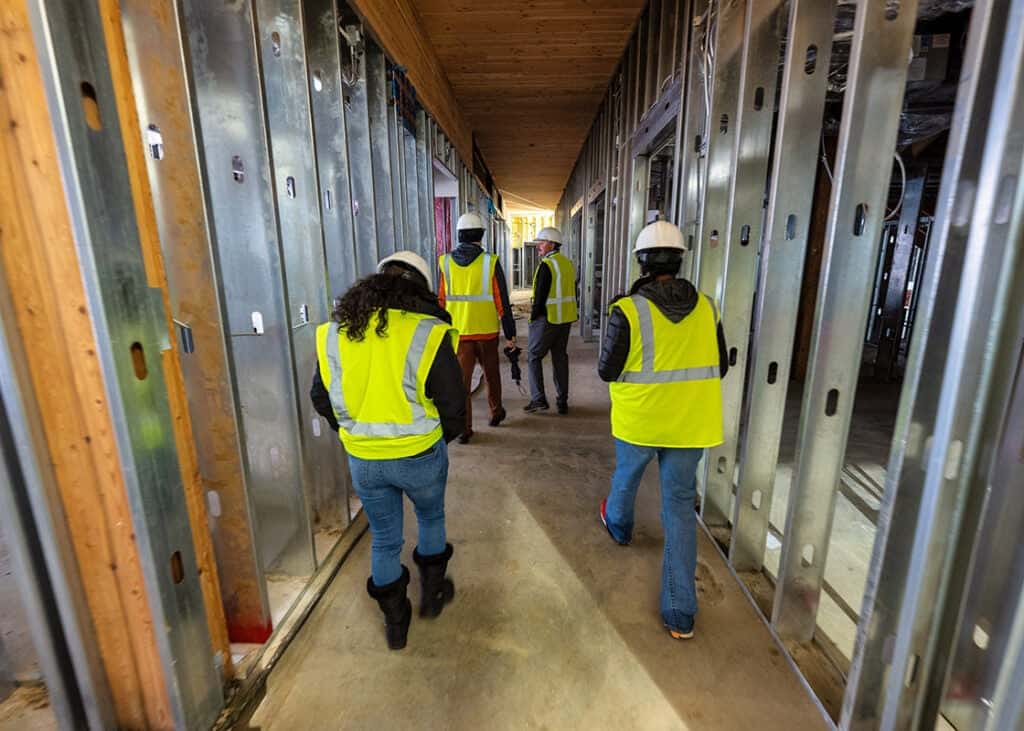
LIIF’s Affordable Housing Capital Innovations Driving National Impact
“This last fiscal year is memorable. LIIF continued its transformative investments in the preservation and production of affordable housing across the nation, extending our footprint and being a bellwether around capital innovation.”
So summarizes LIIF Senior Vice President, Chief Lending Officer Maygen Moore of her Lending Team’s annual impact. Moore’s statement is all the more powerful when considering LIIF needed to weather economic uncertainties, stubbornly high interest rates and a political climate shift. Since our 1984 inception, affordable housing has been the foundation of our lending, with 108,000+ units produced or preserved. Interestingly, we began as the Low Income Housing Fund, so it was right in the name from the start.
Flash forward to today and the Low Income Investment Fund (LIIF) is now a renowned organization reliably deploying catalytic capital in states red and blue, communities urban to rural, so all Americans are afforded the opportunity to succeed. We serve as an asset manager and operate as a nonprofit impact fund laser focused on strategic investments in undercapitalized communities.
Child Care Impact
660
millioninvested
430
Kchild care program spaces created, preserved and enhanced

Early Care and Education Capital Innovation Creating Sustainability of Child Care Small Businesses
In Mississippi, the average annual price tag for child care is $5,400, which is 10% of that state’s median $55,000 median household income. Even in comparatively wealthy Massachusetts, the annual cost of child care is grossly unaffordable to many residents, hovering around $21,000. The other 48 states and U.S. territories all fall somewhere in between. The lack of access to affordable child care hits America’s lower-income families the most, in communities urban to rural and everywhere in between. With a dearth of options, parents sometimes decide to not reenter the workforce, which flies in the face of creating a robust local and national economy. Families find themselves between a rock and a hard place trying to figure out which line items in their budget they can decrease to compensate for the ballooning costs of care for their children. The choices are stark, the options few.
That’s where our capital innovation comes into play. We know that the scale of the solution must meet the scale of the problem, which is why we have set our sights on the lofty goal of transforming the entire national child care ecosystem. To date, we have secured eight government contracts. LIIF broadened the traditional financial system’s definition of capital from solely the disbursement of loans to also include our facilities fund management grant facilitation.
Whether center- or home-based facilities, child care providers are on tight margins, with grants preferable to debt capital. Such catalytic grants can be for capacity building to add more children’s spaces or to improve the facility and the level of quality they offer. Now with 25+ years of solutions-oriented work under our belt, we are proud to report that our strategies have enabled us to invest $660 million to impact 430,000 children through an equal number of program spaces created, preserved or enhanced.
Our Supporters
Our impact is your impact.
Amalgamated Bank
Ballmer Group
Capital One Foundation, Inc.
California Child Care Resource and Referral Network
California Community Foundation
California Pollution Control Financing Authority
Cathay Bank Foundation
CDFI Fund – Assistance Awards
CDFI Fund – Capital Magnet Fund Program
CDFI Fund – Equitable Recovery Program
CDFI Fund – New Markets Tax Credit Program
Charles Schwab Bank, SSB
City and County of San Francisco
City National Bank
Conrad N. Hilton Foundation
Couch Family Foundation
CTBC Bank
D.C. Department of Housing and Community Development
DEC San Francisco Department of Early Childhood
East West Bank Foundation
Federal Home Loan Bank of San Francisco
First 5 Alameda County
First-Citizens Bank & Trust Company
Georgia Early Education Alliance for Ready Students (GEEARS)
Georgia Power Foundation
Goldman Sachs Foundation
Harris County Department of Economic Equity and Opportunity
Heising-Simons Foundation
LIFT TO RISE
Marisla Fund
Mastercard Impact Fund
MacKenzie Scott
Mimi & Peter Haas Fund
Morgan Stanley
New York Life Foundation
PNC Foundation
Purpose Built Communities Foundation, Inc.
Riverside County Children and Families Commission
Robert Wood Johnson Foundation
Silicon Valley Community Foundation
The Allstate Foundation
The Bank of America Charitable Foundation, Inc.
The Kresge Foundation
The United Way of the Chattahoochee Valley
U.S. Bank Foundation
U.S. Department of Education
Volunteers of America Texas
Wells Fargo and Company
Consolidated Statements of Financial Position
Per Fiscal Year 2025 Audited Financials
In Millions
| Assets | 2025 | 2024 | 2023 |
|---|---|---|---|
| Cash and investments | 50 | 58 | 55 |
| Restricted cash | 73 | 66 | 38 |
| Notes receivable | 616 | 639 | 529 |
| Allowance for loan losses | 20 | -13 | -21 |
| Other assets | 38 | 39 | 56 |
| Total Assets | 797 | 789 | 657 |
| Liabilities | 2025 | 2024 | 2023 |
|---|---|---|---|
| Notes payable | 513 | 519 | 450 |
| Funds held in trust | 20 | 29 | 6 |
| Other liabilities | 41 | 63 | 66 |
| Total Liabilities | 574 | 611 | 493 |
| Net Assets | 2025 | 2024 | 2023 |
|---|---|---|---|
| Noncontrolling interest in subsidiaries | 4 | 4 | 5 |
| Without donor restrictions | 153 | 121 | 105 |
| With donor restrictions | 66 | 54 | 54 |
| Total Net Assets | 222 | 178 | 164 |
| Total Liabilities and Net Assets | 797 | 789 | 657 |
Consolidated Statements of Financial Activities
Per Fiscal Year 2025 Audited Financials
In Millions
| Revenue | 2025 | 2024 | 2023 |
|---|---|---|---|
| Net financing income | 18 | 18 | 11 |
| Syndication fees | 4 | 6 | 9 |
| Grants and contributions | 70 | 42 | 70 |
| Other | 14 | 11 | 9 |
| Total Revenue | 106 | 77 | 97 |
| Expenses | 2025 | 2024 | 2023 |
|---|---|---|---|
| Program expenses | 43 | 53 | 83 |
| Supporting expenses | 18 | 17 | 15 |
| Total Expenses Before Noncontrolling Interest | 61 | 74 | 98 |
| Donor restriction | 2025 | 2024 | 2023 |
|---|---|---|---|
| Change in assets without donor restriction | 32 | 15 | 3 |
| Change in Assets with Donor Restriction | 12 | -1 | -4 |
| Change in Total Net Assets | 44 | 14 | -1 |
Board of Directors and Leadership
Board Officers
Reymundo Ocañas, Chair
Executive Vice President, Director of Community Development Banking, Corporate Responsibility Group, PNC Bank
Jessica Sager, Vice Chair
CEO, All Our Kin, Inc.
Gloria Lee, Secretary
Co-Founder and Head, Rise Community Capital LLC
Eileen Fitzgerald, Treasurer
Founder and Principal, ThruSight LLC
Board Directors
Tawanna A. Black
CEO, Living Truth Enterprises
Russell J. Bruemmer
Retired Partner, Wilmer Cutler Pickering Hale and Dorr
Calvin Gladney
LEED AP
Former President and CEO, Smart Growth America
Jennifer LeSar
CEO and Founder, LeSar Portfolio of Firms, San Diego, California
Carol R. Naughton
CEO, Purpose Built Communities
Dionne Nelson
President and CEO, Laurel Street
Daniel A. Nissenbaum
CEO, Low Income Investment Fund
Bindiya Patel
Executive Director, Leadership Tomorrow, Seattle, Washington
Erika Poethig
Executive Vice President for Strategy and Planning, Civic Committee and Commercial Club of Chicago; Member of the Illinois Housing Development Authority
Yohana Quiróz, Ed.D.
Chief Operations Officer, Felton Institute
Margaret Solle Salazar
CEO, REACH CDC, Portland, Oregon
Michael A. Solomon
Managing Director, Community Development,
Charles Schwab Banking and Trust Services
LIIF Senior Staff
Daniel A. Nissenbaum
Chief Executive Officer
Kimberly Latimer-Nelligan
President
Panagiota Mahendru
Executive Vice President and Chief Financial & Administrative Officer
Denise Noel
Executive Vice President and General Counsel
Rachel Bluestein
Senior Vice President and Chief Program Officer
Angie Garling
Senior Vice President, National ECE
Susan Hyman
Senior Vice President and Chief Credit Officer
Maygen Moore
Senior Vice President, Chief Lending Officer
Christina Shiwbalak
Senior Vice President, Chief Business Operations Officer
Jessica Standiford
Senior Vice President, Chief Development Officer