
As we reflect on a year shaped with economic and political challenges, LIIF’s mission remained steadfast: raising and structuring capital to create opportunity in communities where mainstream financial markets fall short.
We are recognized as a trusted capital innovator and steward. LIIF continues to produce and preserve affordable housing, develop actionable solutions for early care and education (ECE), and invest in vital community facilities such as charter schools and health care centers.
Serving More Communities
To address rising demand, we have broadened both our geographic coverage and lending criteria, expanding access to credit in areas from Bend, Oregon to Milwaukee, Wisconsin and from Coachella Valley, California to Kerrville, Texas.
Yet the scale of the challenges we face calls for much more action. The U.S. faces a 4.5 million housing unit shortage while inadequate child care costs our economy $122 billion annually in lost productivity. As we embark on a new year, we are mobilizing to address these interconnected issues head-on.
Our impact-driven methodology ensures every American can thrive in a vibrant community. In 2025, we actively deployed lending capital and flexible grants, carefully tailored to maximize impact, supporting developers in communities with the greatest need. To exemplify our impact, in just eight years we reached a milestone of over $300 million lent in our newest region, the Southeast.
With over four decades of credible, fiscally sound lending, our consistent A/Stable rating from S&P and AAA rating from Aeris underscore our financial strength. Our default rate remains well below industry norms, supported by partnerships with over 30 leading banks. This strong foundation fuels our confidence as we scale community investments. Midway through our commitment to catalyze $5 billion by 2030, we have already achieved 77% of this milestone.
A Proven Track Record
Our history demonstrates measurable impact: LIIF has invested $3.9 billion to serve 2.6 million Americans, including in-home child care providers, unhoused veterans and developers turned away elsewhere. By providing flexible, patient capital to those with few other options, we’ve created a growing ripple of positive change.
Together with our partners and stakeholders, LIIF is poised to deepen our impact, expand opportunities and build thriving communities nationwide.
Leading Child Care Solutions So Parents Can Work
We are now the leading national community development financial institution (CDFI) focused on the child care ecosystem, an area foundational to our economy. LIIF has invested $660 million to create, preserve or enhance 430,000 child care spaces, delivering 40,000 hours of technical assistance to sustain these vital small businesses. Our innovative ECE efforts are making measurable impact, from California’s Infrastructure Grant Program to programs in Georgia, Texas and Oregon, with the latter co-locating affordable housing with child care to reshape possibilities for families.
Our Family Child Care (FCC) Facility Acquisition Grant homeownership program, made possible through partnerships with San Francisco’s Department of Early Childhood and the Federal Home Loan Bank of San Francisco, fosters generational wealth-building for in-home providers in one of the nation’s most expensive markets. This loan product closes gaps for entrepreneurs seeking to grow and maintain their small businesses, offering three- to five-year, fixed-rate loans of up to $100,000.
These ECE centers and providers represent an “invisible workforce” enabling parents to work and economies to thrive. Supporting these entrepreneurs means investing in community potential.
Catalyzing Recovery
During the pandemic, as construction slowed to a halt, we didn’t stand on the sidelines. We provided predevelopment and developer bridge loans. These were vital lifelines that kept projects, and the organizations behind them, afloat. We move quickly to provide support to communities when government aid can be slow to reach those in need.
In 2025, we supported Los Angeles County licensed child care operators by issuing emergency grants after wildfires. We stood up new funds, LA RISE (Recovery and Investment in Service of ECE), to support recovery before federal dollars arrive. Through every crisis — economic downturns, disasters, the pandemic — we rise to meet the moment.
Innovative Partnerships Driving Change
In FY25, LIIF continued serving as facilities fund manager for the California Department of Social Services’ $350.5 million Infrastructure Grant Program (IGP), deploying $86 million in grants in that year alone. Our work transitioned from renovation and repair grants to hundreds of major construction projects. This program, which is the largest any state has ever dedicated to strengthening ECE facilities, has now supported over 4,000 center- and home-based child care providers.
LIIF is working with local and state governments across the country to research and offer recommendations about building the supply of ECE. This included Georgia, where LIIF led a cohort of four cities develop and implement plans to increase child care supply, to New Mexico, where our research is helping inform the state’s commitment to universal child care.
Navigating Challenges, Seizing Opportunities
Our sector faces serious challenges. Federal investment is shrinking even as market disruptions intensify, with challenges around climate disasters, insurance shocks, and supply and affordability crises. Now, more than ever, we must ensure that proven effective models leveraging private capital, like CDFIs, are protected and strengthened, not swept aside in efforts to reduce government programs.
Tackling New Approaches to Use Federal Land
In Kerrville, Texas, LIIF provided a $500,000 predevelopment affordable housing loan as catalytic capital for Freedom’s Path. This spurred the development of 52 units of multifamily housing for military veterans who are disabled and/or are experiencing near homelessness. Forty-six of those units will be affordable to veterans earning between 30% and 60% of area median income (AMI); the remaining six units will be market rate and reserved for veterans. The sponsor, Solutions for Veterans, is leasing the land from the U.S. Department of Veterans Affairs for 99 years, ensuring that costs remain low and rent stays affordable for the foreseeable future.
LIIF has always adapted to challenges: We bridge Wall Street to Main Street, leveraging powerful federal tools to bring community-centered projects to life where conventional lenders won’t engage.
Looking Ahead with Optimism
Our approach remains simple but profound: connect capital to purpose, to people and to possibility. Everything we achieve stems from your partnership and support. Your trust enables us to turn vision into reality. Our success is your success; our impact is your impact.
At LIIF, intentional community development means delivering opportunity, security and mobility, not merely financing deals. Our track record demonstrates that with strategic vision and the right partners, undercapitalized communities consistently exceed expectations, transforming perceived risks into extraordinary potential.
We close this year with pride in our accomplishments and hope for what lies ahead. Moving forward, LIIF will continue transforming even more communities nationwide because “We Are Capital Innovators.”
With gratitude and resolve,
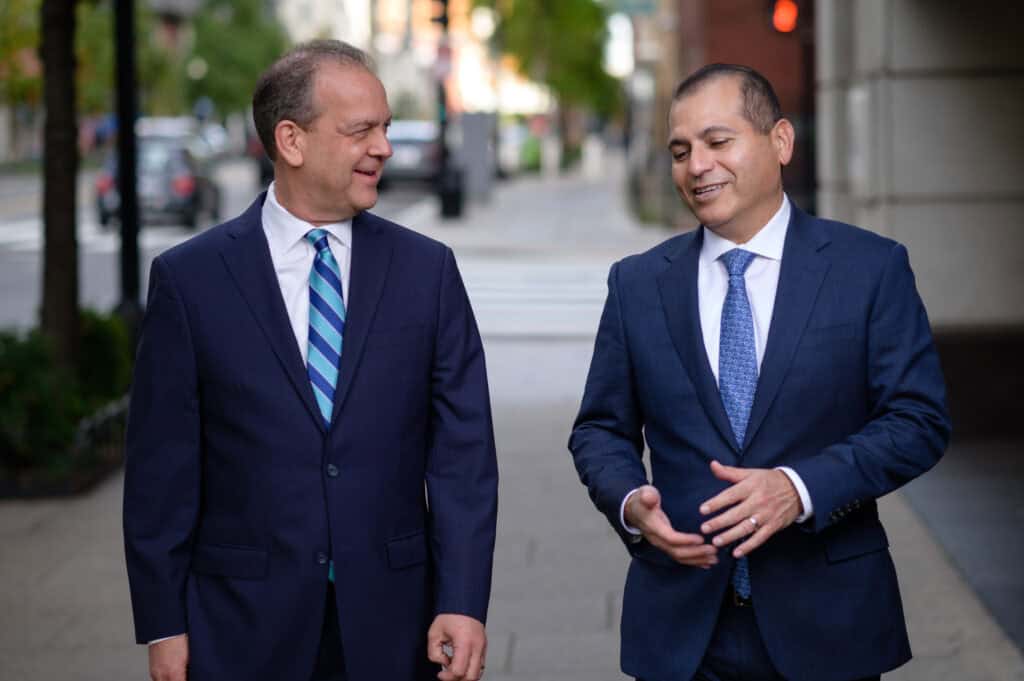
Daniel A. Nissenbaum
Chief Executive Officer, Low Income Investment Fund (LIIF)
Reymundo Ocañas
Board Chair, LIIF
Executive Vice President, Director of Community Development Banking, PNC Bank
We are recognized as a trusted capital innovator and steward. LIIF continues to produce and preserve affordable housing, develop actionable solutions for early care and education (ECE), and invest in vital community facilities such as charter schools and health care centers.